
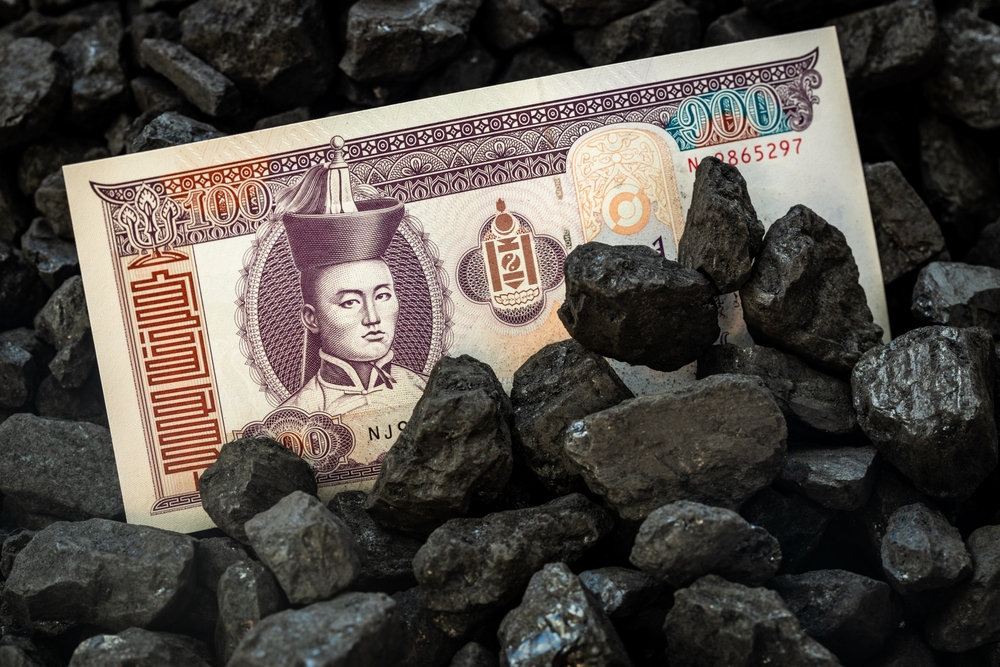
Oil has been the primary driving force behind Mongolia’s economy, having started in 1950 with the establishment of the country’s first refinery as part of the Soviet Union. The consequences of the nation’s dependency on coal and oil, both as exports and for local use, are starting to show – in 2009, approximately 20.9% of children living in Ulaanbaatar, the capital and only major city, exhibited signs of chronic asthma derived from increasingly concentrated air pollution from the use of coal and wood-burning stoves. The strength of Mongolia’s economy hinges on exports to China – it is a landlocked country with no ports, making other approaches to material manufacturing difficult and burdensome. Grassland protections from overgrazing via the regulation of herd sizes were stripped in 1990 when the Soviet Union fell, resulting in desertification on the borders of the Gobi Desert. Approximately 70% of Mongolia’s grassland has degraded, a quarter of the country rendered a desert where grassy plains used to thrive.
Climate change has been deeply felt by Mongolia’s herding communities. Before the rapid onset of industrialization, Mongolia would experience a notably harsh winter, known as a zud, roughly every decade. Communities knew to prepare and how to economically recover due to its regular infrequency. But in recent decades, Mongolia is seeing these zuds more frequently, sometimes multiple years in a row. Combined with decreases in precipitation and decades of overgrazing depleting the quality and quantity of grasslands with which to feed livestock, more and more herding animals die from a combination of hypothermia and starvation – the grass is too short and sparse to cut through the snow, making the nomadic lifestyle lived by 30% of Mongolians increasingly difficult, painful, and unsustainable. The economic realities of replenishing the herd every few years is pushing more and more Mongolians into Ulaanbaatar, and pushing the economy further and further into the fossil fuel industry to keep afloat.
Mongolia’s dependence on oil is reflected in the progress of its infrastructure projects. Ulaanbaatar has experienced a construction boom over the last decade, due in a large part to the zud refugees coming into the city for work when herding became unsustainable. When the price of oil is high, Mongolia does well with the money it receives from Russian and Chinese oil purchases. Infrastructure projects go into full swing. But when the price of oil sinks, these projects are sometimes abandoned partway through completion due to a lack of funds, oftentimes leaving Ulaanbaatar locals and work-seeking herders hanging out to dry. This dependency on oil export results in China’s control over Mongolian quality of life.
Renewables and Self-Sufficiency
Mongolia has been left on very uneasy, dangerous footing. It has an economy that cannot support itself without the help of outside actors that do not necessarily need Mongolia – with the Mongolian economy existing at the whims of Chinese desire for coal and oil, China’s investment in an expansive solar farm and transition away from coal and oil in Inner Mongolia could inadvertently crash Mongolia’s economy.
The vast Gobi Desert regularly experiences high winds and copious amounts of sunlight. On average, the desert experiences 3,070 hours of sunlight per year (compared to Washington, DC’s 2,601 hours, and Yuma, Arizona, the sunniest city on Earth, at 4,055 hours). At the same time, China’s Gansu Wind Farm in the Gobi Desert produced over a whopping 100TWh in March 2024 alone, marking the highest monthly total wind energy output by one country and totalling out to more than Europe and North America’s combined outputs. Wind and solar-based energies are extremely viable in the Gobi Desert, and China has hit the ground running with its abundance of capital to finance the plants.
Meanwhile, Mongolia’s coal-based power generation capacity is throttled by dependence on aging plants operating far past their prime. But the nation’s renewable potential could be made to meet all domestic demand and cut back on fossil fuel reliance. Green energy development projects have indeed begun, but there is not nearly enough. As of 2023, Mongolia is operating nine solar farms and three wind farms, counting for only 18.3% of its total installed energy capacity and contributing to a meager 9.6% of its total electricity production. The rest of Mongolia’s energy production is still coal-based and lacking in efficiency.
Cashmere is Mongolia’s other primary export, supplying the world with 40% of its cashmere harvested by herding communities and processed for export – 10,000 tons of it, in 2021. However, much Mongolian grassland has degraded due to the combination of climate change and post-Soviet overgrazing to meet market demands and bolster feelings of food security through oversized herds. The UNDP has supported a pilot project to make sustainable cashmere harvesting and manufacturing more profitable to industry herders, bolstering an industry that supports traditional herding lifestyles and leans away from coal and oil export dependency.
But cashmere only makes up 5% of Mongolia’s GDP. On average over the past decade, coal exports have made up roughly 30% of the nation’s export revenue, combining with other mineral extraction exports to make up 21% of total government revenue. That is an enormous chunk of change concentrated on one volatile, environmentally-devastating industry, and the impacts of fewer exports to China have been deeply felt before. As demand for coal begins to slow, starting with China and its renewable energy initiatives, Mongolia still does not have a comparable industry to shift resources towards to lean on in its place – at least, not without significant cash flows supporting the development and sustainability of renewable industries combined with the regulation of energy prices.
Financing Mongolia’s Greener Future
Global investment in green energy does not have to leave Mongolia and its people behind to face either growing environmental destruction or steep financial losses. Nor is Mongolia entirely lacking in ambition to fight for its renewable future – its State Policy on Energy, outlined in 2015, is aiming for 30% of its installed capacity to be renewable by 2030. This is, without a doubt, expensive, and Mongolia is not flowing with the capital to spend on enormous projects like China, which can afford the upfront costs of wind farm installation. Projects spearheaded by the United Nations Development Programme (UNDP) designed to help rural households cope with and adapt to the impacts of climate change on their livelihoods, confront urban pollution, and support greater governance, human rights protections, and the transition to environmental sustainability in the mining and extraction sector help where they can.
Herding households have already begun transitioning to solar-based energy for space heating and cooking. As a result of the successful 100,000 Solar Ger Electrificiation Program, jointly funded by Mongolia, China, Japan, and the World Bank, approximately 200,000 herder family units were using renewable household energy via solar mirrors and/or wind turbines by 2019. However, issues arise in establishing renewables in stationary households like in Ulaanbaatar, where the equipment and their installations are costly. At the same time, the changing climate risks making the traditional herding lifestyle, which has seen successes with its implementation of just energy transition practices, unsustainable due to herd maintenance struggles pertaining to climate and sustainability issues, like the zuds.
Outside funding is not nearly enough to fully finance this transition. It is estimated that $11.5 billion in climate investments is necessary for financing a renewable Mongolia, a nation reckoning with its lack of capacity for the sheer scale of sweeping energy projects coming out of a deep-seated coal dependency. Meanwhile, coal is still a booming industry, and both Mongolian leadership and industry workers worry that they can’t currently step any further away from coal due to the country’s financial dependency – a Catch-22 that will bite hard if Chinese demand for coal slows or Mongolia depletes its coal and mineral deposits.
Mongolia’s future as a greener state hinges on the finances of its just energy transition. The appetite in rural and urban areas is there, as shown by the 100,000 Solar Ger Electrificiation Program, but Mongolia alone is not flush with the cash needed to support a greater degree of urban just energy transition, the lack of which fuels climate and resource access problems faced by rural Mongolians until they are forced out of their livelihoods and into less-renewable, air-polluted urban spaces. But with significant investments from both private and public financiers, Mongolia could be well on its way to a more sustainable future, both in terms of going green and in alleviating its extreme dependence on its neighbors for economic support. If Mongolia no longer has to worry about booms and busts involved with the oil and coal industries and the economic whims of its neighbors, it can build a greener, cleaner, renewable Ulaanbaatar while supporting its traditionally nomadic communities.
But Mongolia is ultimately just one extreme example of a nation wrestling with these conflicts of interest, struggling to balance the long-term health of the land and populace with the consistently immediate need for money to sustain the economy and keep food on the table. Wealthier nations like South Korea are happy to try to sweeten the deal with Mongolia to extract rare earth minerals alongside coal to alleviate their own dependency on China, deepening Mongolia’s own dependency on its extraction economy.
Dozens of developing and emerging countries are experiencing the same conundrum: the money just isn’t there yet, making the push toward renewables a tough sell until questions of climate financing are answered with funding. An enormous, unified effort between the public and private sectors is necessary to secure the climate financing needed to support just energy transitions and keep developing and emerging economies afloat in the process.
Posted 08 May 2024.
 Riley Rogerson
Leave a comment