
The Atlantic hurricane season is coming up again, and meteorologists are expecting 2024 to be especially active. Warming waters are breaking records year after year, fostering the perfect conditions for more frequent and more violent storms to ravage coasts. The costs, financial and human, are deeply alarming, and the rebuilding process never ceases to be long, hard, and complicated. The warming of the Arctic’s atmosphere may be responsible for the slow crawl of cyclones and hurricanes, enabling these storms to hemorrhage rain for extended periods. All the while, the storm pulls water from higher sea levels to further intensify destructive flooding. Cyclone intensity has risen substantially within the past twenty years, with general cyclone activity having noticeably picked up in frequency since the mid-1990s – roughly the time in which ocean temperatures began consistently measuring as anomalously high, and when global temperatures began making consistent increases.
Looking Back at Derna
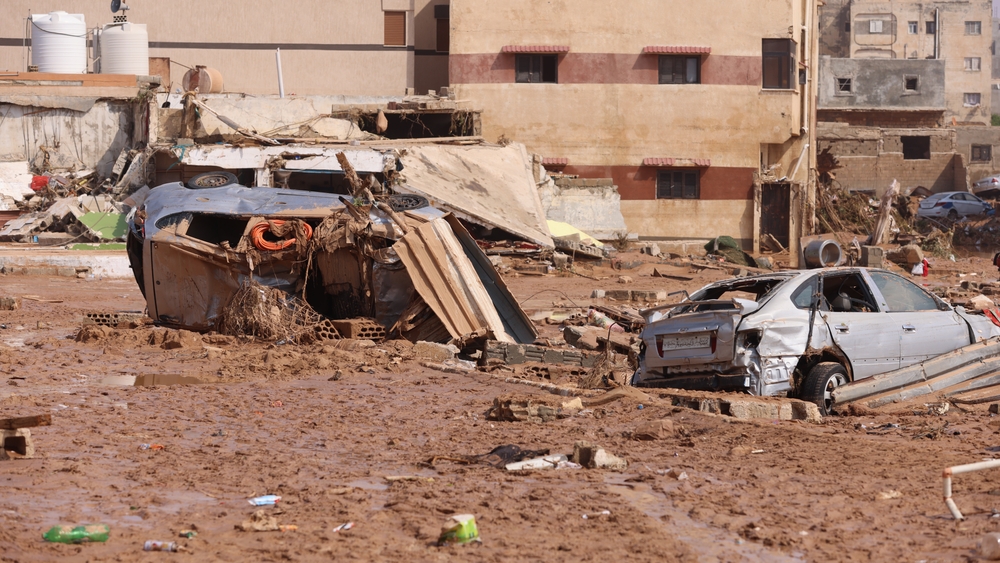
Thousands dead and more missing. Flooding that reduced much of the coastal city of Derna to waterlogged rubble and mud, with an estimated 25% washed away by what became the deadliest Mediterranean cyclone in recorded history. Neighborhoods, bridges, roads, and lives, destroyed by floods brought on by Storm Daniel in Libya last September. While proper evacuation alarms and other measures, preventive and in-the-moment, could have reduced the devastating loss of life, the infrastructure was simply not built to handle such a catastrophe. The UN estimated that at least 11,000 people died in the disaster with thousands more missing, along with at least 40,000 people displaced, their homes and neighborhoods dragged out to sea.
While the eastern government in Libya, headed by the Libyan National Army, could have done more in terms of preparedness and quick action in the days leading to the flood, the other facts of the matter are that of course flooding of this extent is unprecedented, of course the infrastructure was not able to handle it – the world’s oceans are heating up, and the especially warm Mediterranean waters fueled Storm Daniel’s intense rains and the ferocity of its winds. The waters that ripped through the heart of the port city traveled along the Wadi Derna, a dry riverbed for most of the year protected by dams that, while in need of maintenance, ultimately became overwhelmed by the sheer volume of rainfall. The savagery of Storm Daniel’s wake went far beyond a problem of aged infrastructure.
The cost of Storm Daniel was high, with estimates hovering around $1.8 billion in costs and losses. Spain had pledged a $1.07 million aid package, referencing the flooding as a climate emergency via José Manuel Albares on X (formerly known as Twitter). Qatar, Turkey, Italy, and UAE were quick to send material aid, while Egypt opened refugee camps for survivors who lost everything. $1.8 billion lost on top of the devastating loss of human life, history, and material culture. One storm.
Storm Daniel went far beyond the expected for the season. Nobody impacted by the devastation asked for their communities to be on the frontlines of climate change. As we approach the 2024 hurricane season, we are forced to face the reality that disasters of this magnitude will happen again and with more frequency, starting with what we have identified as today’s frontline communities. How will those frontlines shift if we continue to neglect our climate? When, if ever, will the devastation be enough for top carbon emitters to exchange potential profits for lives saved? What is rebuilding supposed to look like in such heavily devastated frontline communities shattered by material and emotional loss?
In Derna, humanitarian relief organizations plan to move to the next phase of reconstruction by June, having struggled against bureaucratic roadblocks and other access and supply distribution issues. The cost of food keeps rising, while feelings of loss and trauma permeate a city struggling to recover.
The Heavy Costs of Climate Disaster in the United States
Across the Atlantic, Florida continues to build new communities on its most high-risk coasts that have been wrecked by hurricanes year after year. Middle and working-class communities are forced to leave their destroyed homes, while buyers with deeper pockets move in to face the next round of storms. The communities are rebuilt and people encouraged to move in, only for homes and other infrastructure to be destroyed again. And again. And again. Retirees moving to these new oceanside developments is profitable, and as the death toll climbs, the very retirees the state encourages to move to Florida are some of the most vulnerable people, moving to the most vulnerable locations.
With the cost of living high and many Americans living paycheck to paycheck, where will those most impacted by climate-fueled disasters go? Where is it safe to be, and what will we do when zones considered safe continue to shrink? Can, or should we endure these costs, financial and human? Storm losses in 2022 in the United States soared higher than a whopping $165 billion. Between 2016-2022, over $1 trillion. Beyond the monetary costs are the lives, both the ones lost and the survivors who are left to contend with the fallout.
Hurricane Ian’s devastation in central and southwest Florida was still profoundly felt a year later as approximately 28% of insurance claims were closed without payment, leaving hundreds of thousands of residents stranded with limited capital to rebuild their lives and homes. Many of those who received payment received dismally little. Meanwhile, many successfully-rebuilt properties are sold to new buyers at a premium, or redeveloped entirely into luxury resorts after previous residents were pushed out post-Ian. Is this “rebuilding?”
What’s Next?
Hurricane season begins on June 1 and will last through November. The waters are getting warmer. These storms are getting stronger with greater frequency, and hurricanes are far from the only type of chaos the changing climate has thrown at us. West & Central Africa is enduring a record-breaking drought, and California’s raging wildfires have been tied to climate change fueled by human activity. Humans evolved to adapt, it’s what we’re good at. But the planet has surpassed the dreaded global 1.5°C threshold, careening us toward a future where questions of habitability and rebuilding may have even harder answers than what we’ve endured thus far. What will the process of rebuilding frontline communities look like as we see massive numbers of climate-related deaths, displacements, and widespread destruction following storms of unprecedented power? Just the same as it is today, those most deeply impacted will reckon with these questions on more extreme scales first.
Posted 08 May 2024.
 Riley Rogerson
Leave a comment